
Every entrepreneur faces the same struggle: getting customers. Daniel isn’t technical, but the marketing process and the lessons he learned apply to every founder.
Meet Daniel
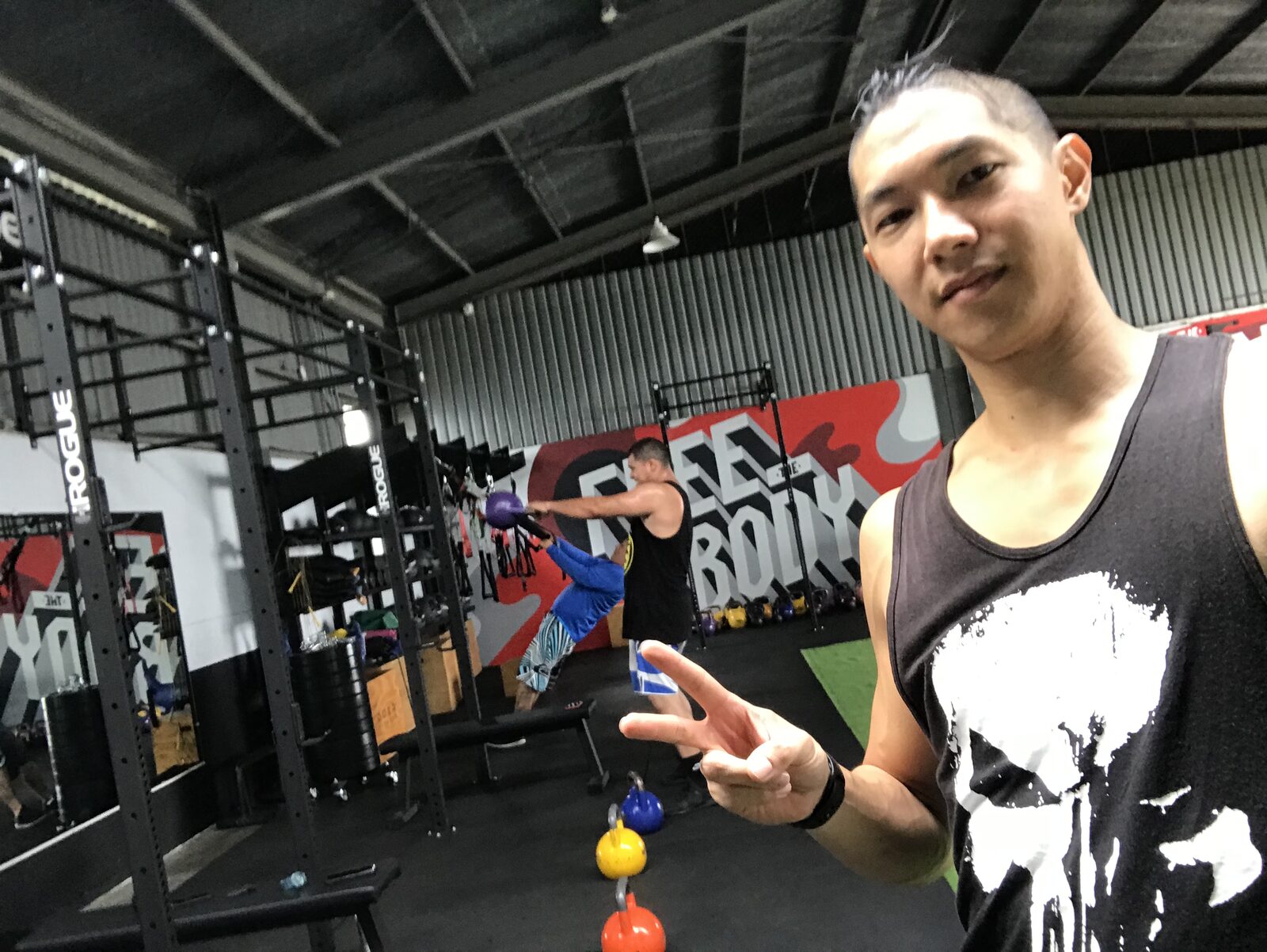
Daniel is an entrepreneur in Taiwan who has always wanted to run his own gym. He’s Level 2 CrossFit certified and coached the local college dragon boat team in Taiwan to a gold medal.
When we first met, Daniel wasn’t sure what he needed. He’d been working with designers on his gym space, but it wouldn’t be finished until December. He wanted to meet just to get a sense of how marketing could help. Like most entrepreneurs, he didn’t really understand what “marketing” meant in practice, or how to turn that vague concept into something executable.
I told him he should probably start marketing before he built his gym (his product). He wasn’t clear on who his customers were, how he’d reach them, or what he’d actually offer. I pointed out that if his assumptions about his audience turned out to be wrong, the product itself (the gym) might need to change. (I go deeper on this idea in Positioning Before You Have a Product.)
Start Small Before You Build the Whole Product
Most businesses have a main product — in Daniel’s case, the gym — and a handful of smaller, targeted products around it: classes, snacks, personal training sessions. The smaller products are usually easier to market. “Come to our free Saturday CrossFit form review class” is specific, low-commitment, and appealing to a particular worry. These small offers are a great place to start when you want to test the market.
I recommend starting with events.
If you’re a technical founder you may be thinking, “This is event marketing, it doesn’t apply to me…” but I would disagree. In the early days of a tech business you need to get to know your customers and events are one of the best ways to do it. I’ve worked with founders who were trying to sell digital products through google ads, and it worked they got a few sales but they had no idea who the people who were buying were and a couple of landing page tweaks later the sales dried up. In the early days you need to get to know your customers and events are one of the best ways to do that.
So Daniel and I decided to run a fitness event in a local park. It would tell us whether we could actually reach the market, give us a gauge of our understanding of the problems customers face, put us in touch 1:1 with customers and give us a feel for what running a gym built around small group classes would be like.
The Offer We Tested
The process in marketing is always the same:
- Figure out who you’re marketing to
- Put together an offer for them — the party invitation
- Find a way to put that offer in front of cold traffic (this part matters)
- Execute
After talking through Daniel’s vision for the gym, his background, and the kind of customers he wanted to serve, we landed on this offer:
Join us for Fitness in the Park on Saturday August 1st at 6PM
Training alone gets old. Same solo grind, no one to push you, no one to tell you your form’s off.
It’s a lot better with a crew — outdoors in the park, sunshine, good energy, with people who are into the same thing you are. And a coach actually watching how you move, fixing what you can’t see on your own.
If this sounds like your kind of morning, come to our free Fitness in the Park event on DATE at TIME.
Here’s what you’ll get:
Get expert eyes on your form. Daniel breaks down your squat, plank, and clean, critiques how you move, and answers the form questions you’ve never had the chance to ask.
Train outdoors with your crew. A group workout in the park alongside other fitness-minded people — a lot more fun than another solo session inside.
Go for the fitness, stay for the fun. Train hard, then hang around — this isn’t a rush-in-rush-out session.
Plus, everyone who comes gets:
- A free Movement Evaluation voucher — a private 30-minute session with Daniel to map out where your movement’s at (book anytime within 30 days)
- The plank challenge — last one standing wins a free 1-hour training session with Daniel
- A poke bowl picnic in the park — we’ll do a group Uber Eats order
I’m Daniel, your coach. I’m a Level 2 CrossFit coach, and I trained the NSYSU dragon boat team to a gold medal. I fell in love with fitness and I want to help you do the same.
Save your spot — [SIGN-UP LINK / reply to reserve]. We’re capping this at 8 people so Daniel can give everyone real attention — grab your spot before they’re gone.
We planned to promote the event on a local event platform — minimizing what we needed to build from scratch.
We considered organic channels but went with Meta ads instead. Organic comes with a few built-in problems. First, you’re at the mercy of the algorithm: you can have a great offer and still not get shown to anyone. Second, organic audiences tend to be lower intent — people buy when life hands them a problem, and ads are much better at catching that moment than organic ever is. Third, organic often sells on brand (people liking you) rather than problem-solution fit. Brand can move product, but it also masks a bad offer — if people are buying because they like you, you can’t tell whether the offer itself actually works.
So, for testing purposes, ads it was.
Testing Three Ad Angles
Running ads gives you a real opportunity to test your assumptions about audience and offer. In our case, we didn’t know whether people were more drawn to a fun social workout or to “here’s a coach who’ll fix how you move.” So we built out a few different personas, each with a different psychological hook, and ran three ad angles:
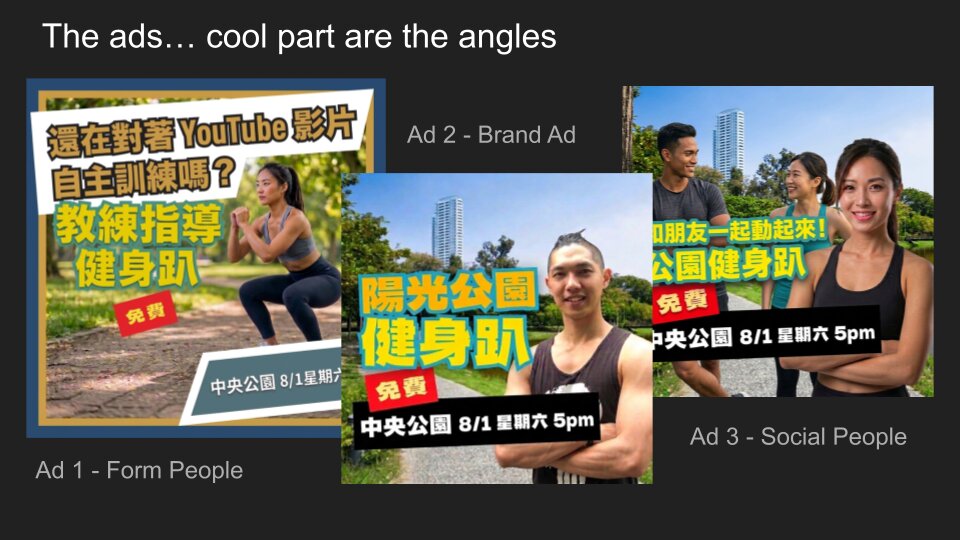
- Concept 1: Are you still watching YouTube to get your form cues? — aimed at people looking for form critique and real coaching.
- Concept 2: Sunshine Park Fitness Party - This ad was designed to match the landing page with no spin, just the event name.
- Concept 3: Come Work Out With Friends — leaned into the social side of the workout.
Before you move on, guess which one had the highest CTR (click-through rate) and signup rate.
The Results
We ran the campaign for a week and a half on $150. The results were genuinely surprising.
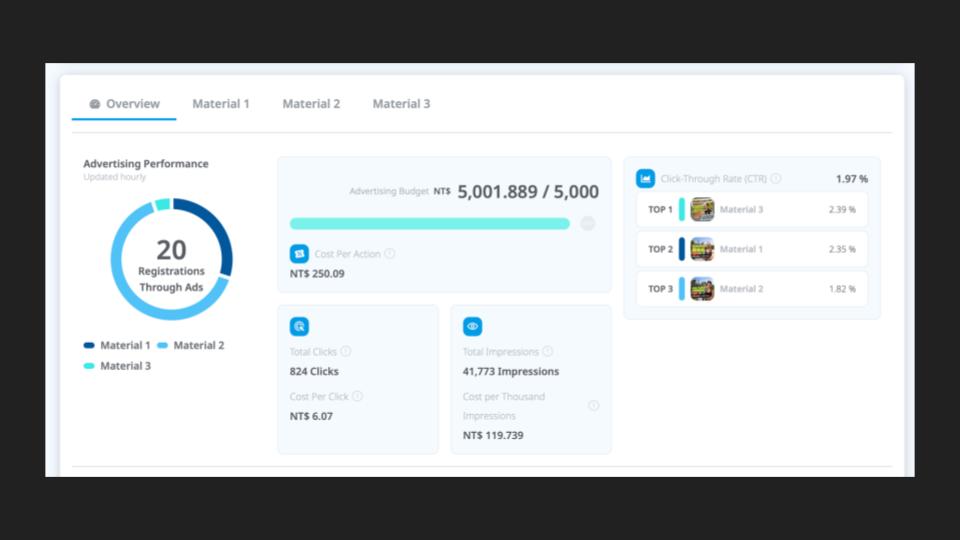
Over the week, 30 people registered, 20 of them trackable through ads. Click-through rate favored concept 1, then concept 2, then concept 3 — but signups flipped that order entirely. The “workout with friends” ad brought in 13 signups, “fitness party” brought in 6, and “form cues” brought in just 1.
My read: there are people out there who care about form, but our offer was built entirely around the social experience and that’s what converted. It wasn’t what we expected going in, and it’s exactly the kind of thing you can’t learn any other way. We’re planning to test a different offer aimed at people interested in form soon. (For another example of what a small test can teach you, see The Results From A Market Test On A 3,000-Person Threads Audience.)
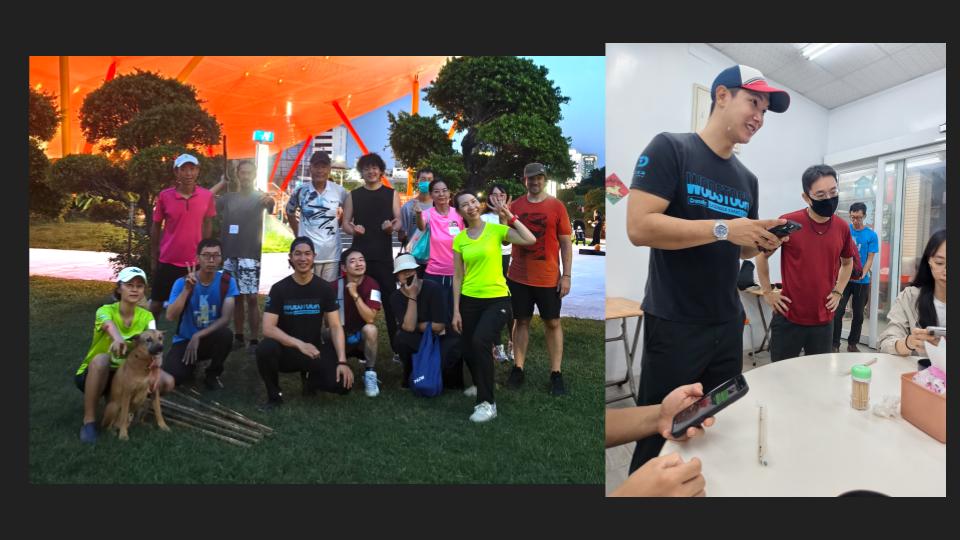
Twelve people showed up to the actual event — mostly casual fitness folks, not the CrossFit or weightlifting crowd. Everyone stayed for dinner, which gave us real time to get to know them. Daniel was thrilled with the turnout and learned a ton.
What We Learned
Afterward, we asked for feedback. People liked the social side but hadn’t expected the CrossFit focus. Going in, we had no real read on who’d show up or how the class would land, so some mismatch was inevitable — but running the event surfaced it immediately, which is the whole point.
What’s Next
Now we’re prepping for round two. We know we can reach people through these channels; the open question is whether to lean the offer more CrossFit or more casual fitness. Next, we’re testing willingness to pay — pricing on some ads — along with a few new offer variations.
You can’t build a business without access to the market, and you don’t really know what the market needs until you start serving it. For years, I made the mistake of building ideas in my head with no market testing at all. I’ve since learned to do things differently.
Daniel’s case study shows the bones of a good market test: an offer, a set of ads, and a small product that gets you in front of real customers in a limited way so you can learn fast.
If you’re working on a product, this is something you can do too. Get in touch.