
I recently worked with an entrepreneur selling booking software to small travel companies — Kayak tour operators, historic home tour operators, that kind of thing.
He’d landed a few customers through local events, but growth was slow. Worse, his customers were so varied that he kept building one-off features with no clear target market.
He didn’t know how to attract customers to him, and that meant he was stuck.
What he needed was a repeatable way to reach a consistent set of customers, and that’s what we set out to find.
Start with competitors
The fastest way to understand a new market is competitor research. Competitors have already figured out how to reach and sell to your target customers — study them, and you shortcut months of guessing. (I use the same approach for a PDF tools company in How Smallpdf Gets Customers — worth reading alongside this one.)
So our first question was: Who is already selling booking software to tour companies?
We asked Gemini. Gemini has been trained on text that spans the entire internet and it’s very good at pointing us at both big and small competitors.
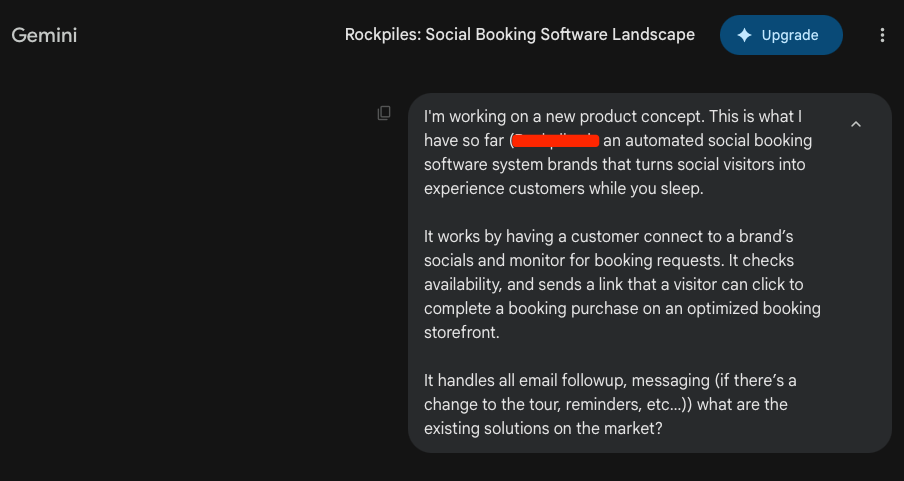
In the end Gemini pointed us toward Tour/Experience Storefront platforms: FareHarbor, Peek Pro, Bokun, and Rezdy.
These platforms manage calendars, payments, and post-booking communications for tour operators — exactly the customers we wanted to reach.
Get a market overview with SEMrush
Before going deep on any one competitor, I use SEMrush (free for 10 lookups/day) to quickly size up the landscape.
It’s a quick way to make sure we’re investing our deep-dive research into big, seasoned competitors instead of wasting it looking at minnows.
I always pick one competitor and start with a domain overview.
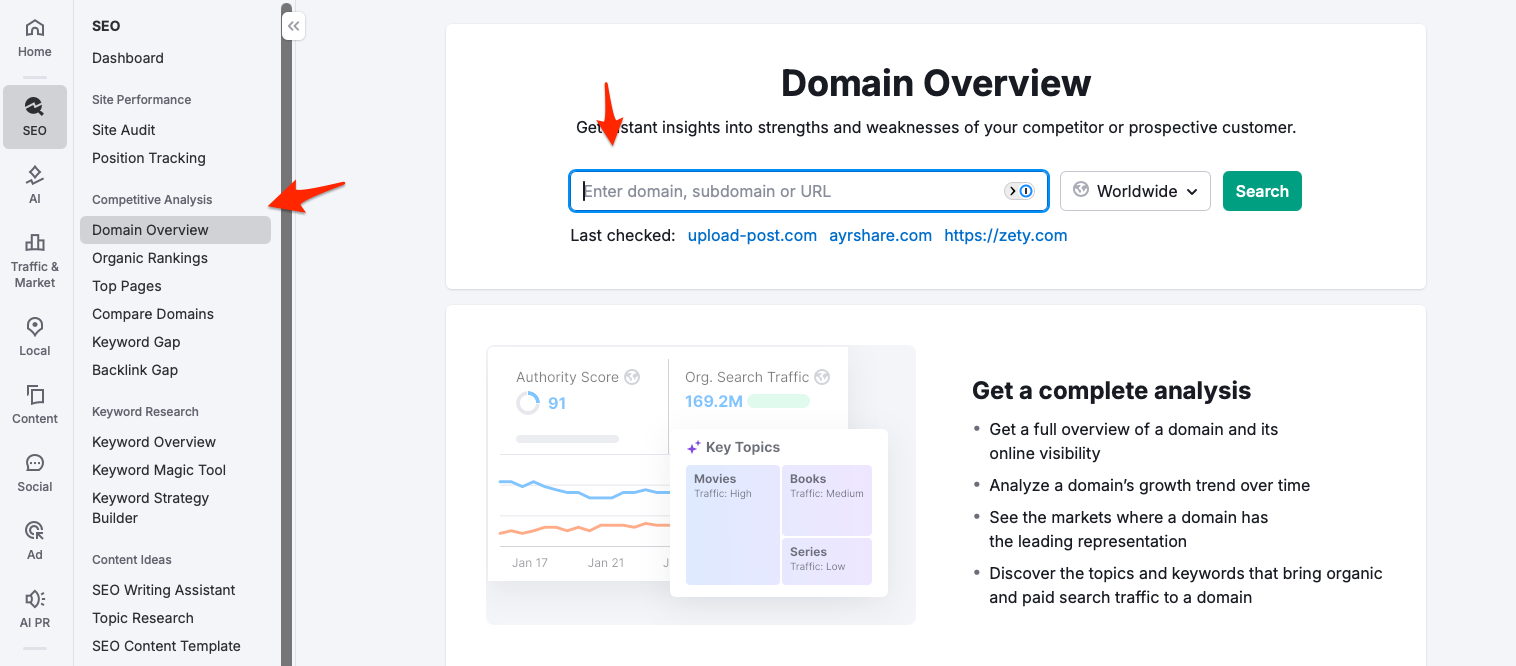
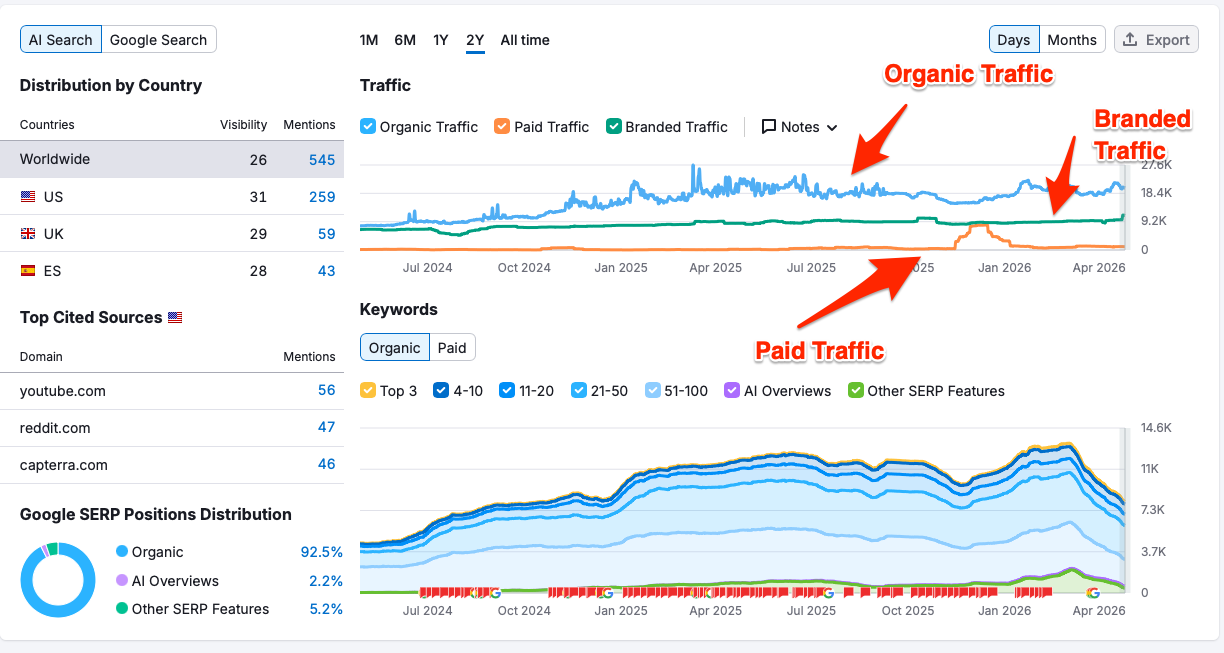
I immediately scroll down to the traffic section and get a sense of how much traffic this competitors is getting and what sources it comes from.
- Organic traffic — a rough proxy for market size
- Branded traffic — indicates brand strength
- Paid traffic — if a company is buying search ads, it’s a sign people are making money in the niche
These traffic numbers are very useful. When you’re thinking about starting a business you always want to know, “how big is this opportunity”. The traffic numbers give you a measure.This competitor managed to grow this big. Maybe you can as well.
But how do you know you’re looking at a competent competitor? What if there’s a company out there who is employing better marketing strategies? For that you need to view the competitive positioning map.
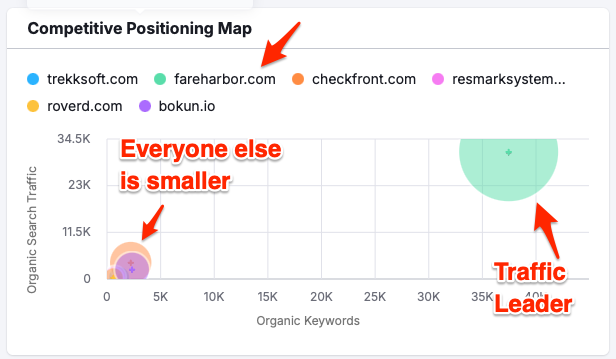
The competitive positioning map in SEMrush shows which companies’ search terms overlap. It’s useful for spotting the biggest market players you might otherwise miss.
Here’s the competitive positioning map for this tour operator software market.
FareHarbor clearly dominates. We should definitely research them at some point, but for this walkthrough we focused on Bokun, whose clean, modern design matched the product we were building.
Deep dive: Bokun’s socials, ads, and funnels
The Hero
We start by looking at their homepage.
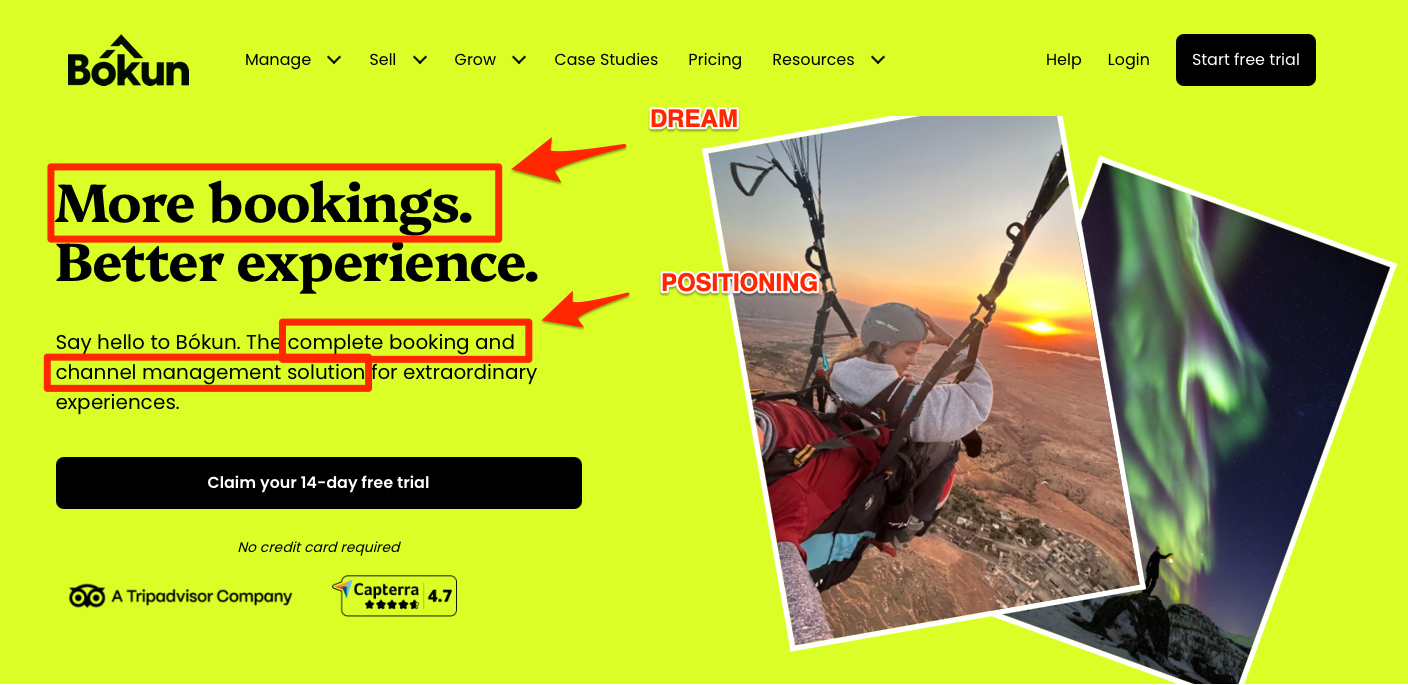
Look at the hero section.
Companies who have been in the market for a long time have dialed in their messaging so that it is clear and convincing.
Often times founders working on new products will have confusing headlines or unclear positioning.
Bokun’s hero positions them as a “complete booking and channel management solution” with a simple value prop: more bookings.
The simple act of studying competitors’ messaging can help you tune your own, so don’t skip this step! Messaging is the first part of marketing and if your messaging is confusing nobody will buy what you’re selling. For a framework on how to write messaging that connects with customers, see If You Want to Build Something People Actually Love, Start with Their Dream.
The Socials
The next thing we look at is the socials.
They’re almost always shown at the bottom of a website, and researching them shows us the methods the company is using to get people to the homepage.
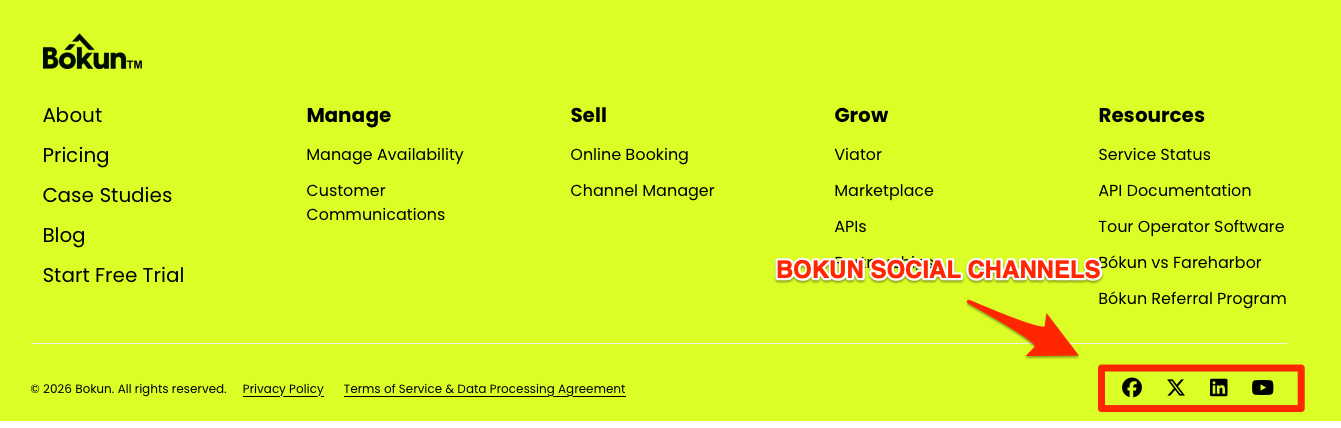
Open each channel and take a quick look.
You’re looking for real engagement. Recent posts with lots of reactions and comments.
The goal is to understand which channels work best for this competitor.
We start with Facebook.
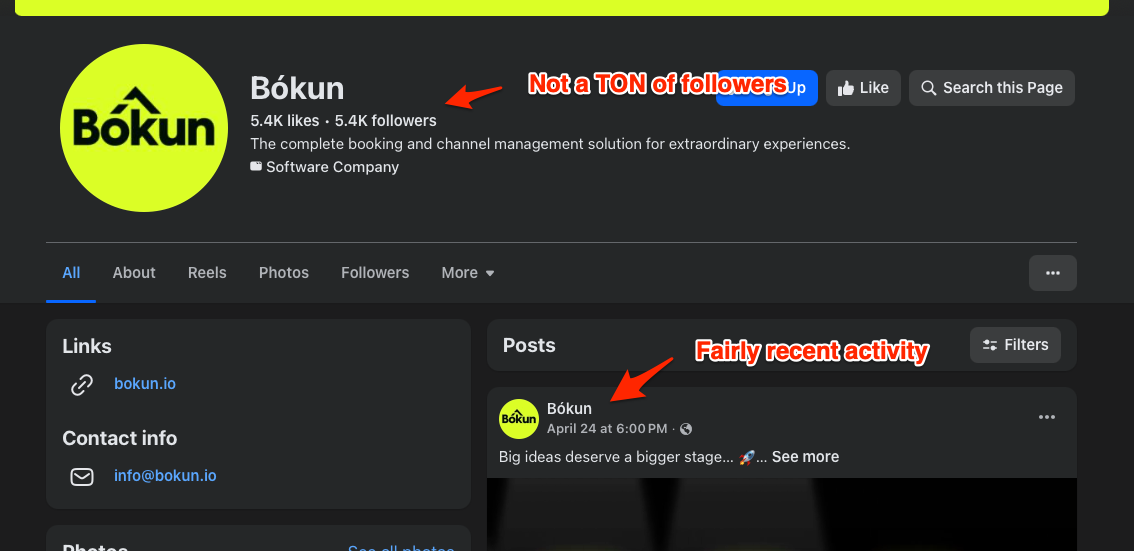
Almost immediately we see that it’s not too active.
The company has been around since 2012. Only 5.4K followers? Really? Go quickly through this phase. We’re just looking for their best channels and the inactivity tells us it’s not worth spending time here.
On to X…
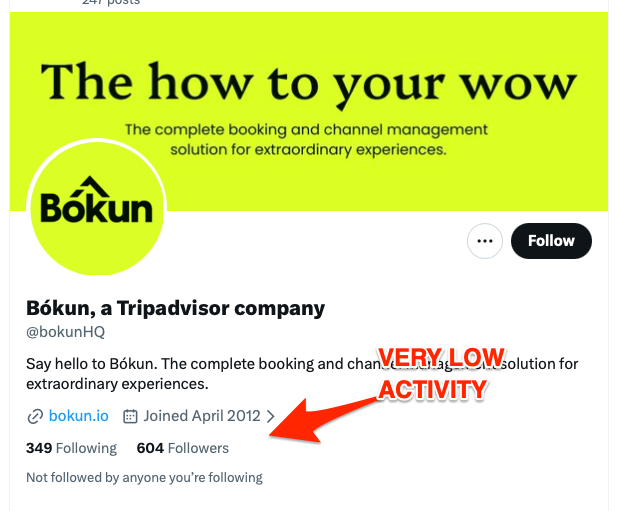
X is even worse.. there’s almost no activity there. This company doesn’t do it’s marketing on X.
Now LinkedIn… and…
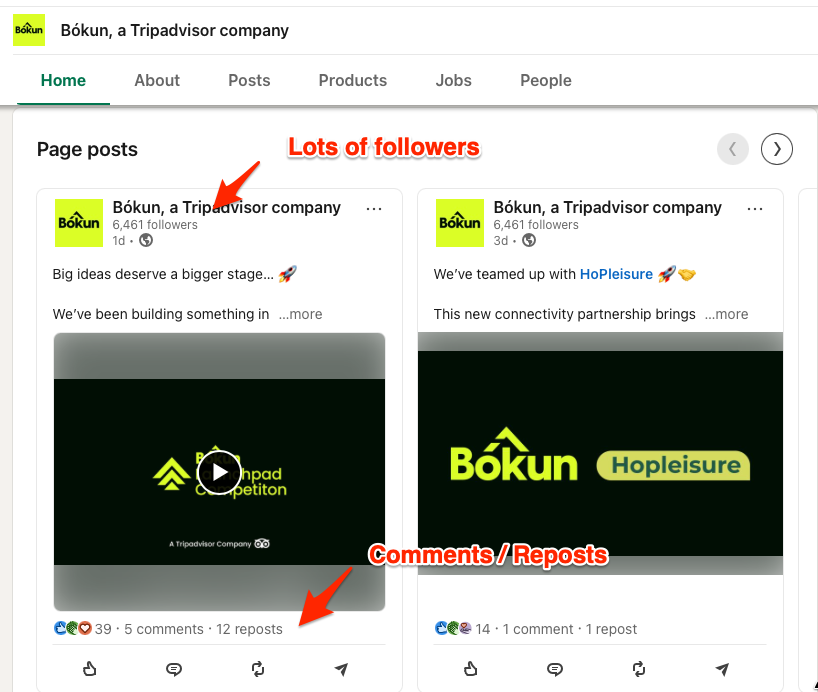
Now we’re seeing more activity. On LinkedIn they’re posting every couple of days and getting lots of comments, engagement and reposts. Maybe LinkedIn is a good channel for them?
Finally YouTube… and…
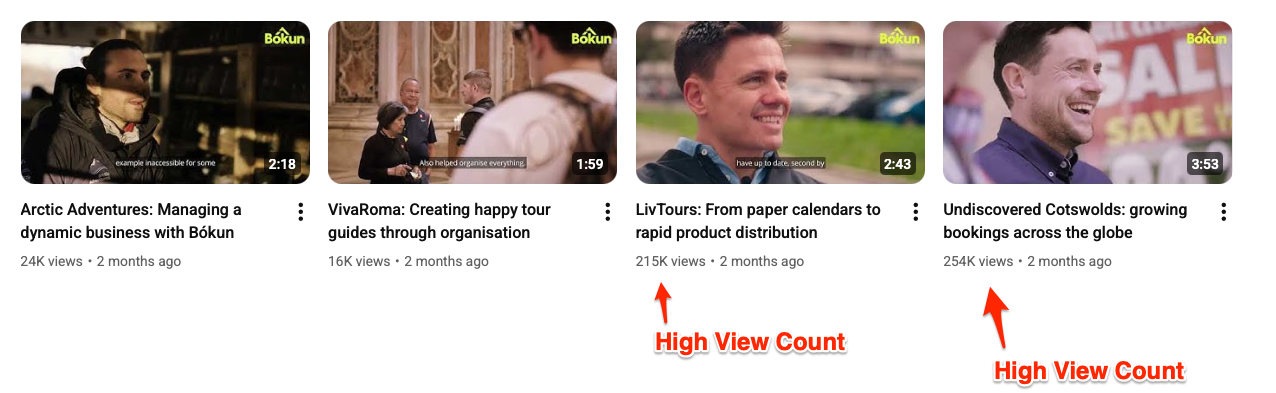
Boom! Huge view counts. Digging deeper we see that Bokun is telling the story of tour operators who streamlined their businesses by using Bokun. We can see how their art direction and storytelling work. Maybe this is a good GTM approach?…
But we’re not done yet. Organic socials are a great way to see messaging and brand building activities, but the real gold is in paid promotion.
Ads (the real gold)
Organic social shows brand building; paid ads show the actual money machine. Facebook, LinkedIn and Google all provide libraries where you can see the ads companies run so let’s go find those ads! And let’s start with…
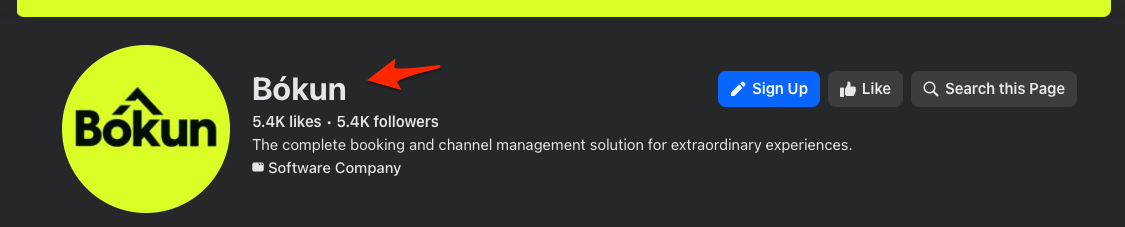
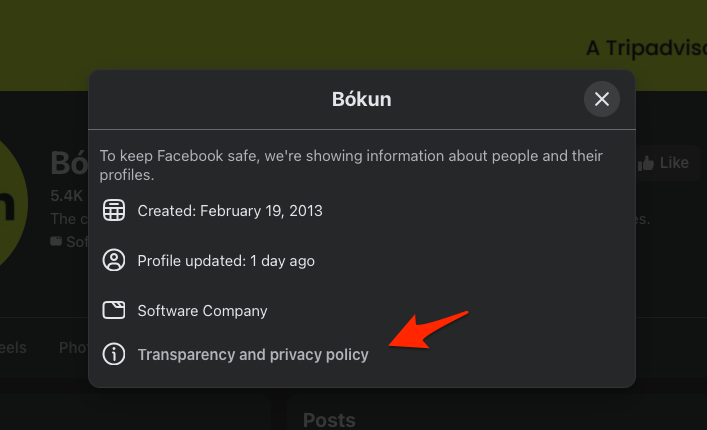
You can get to the Facebook Ads Library for a company by clicking on the company’s facebook page name…
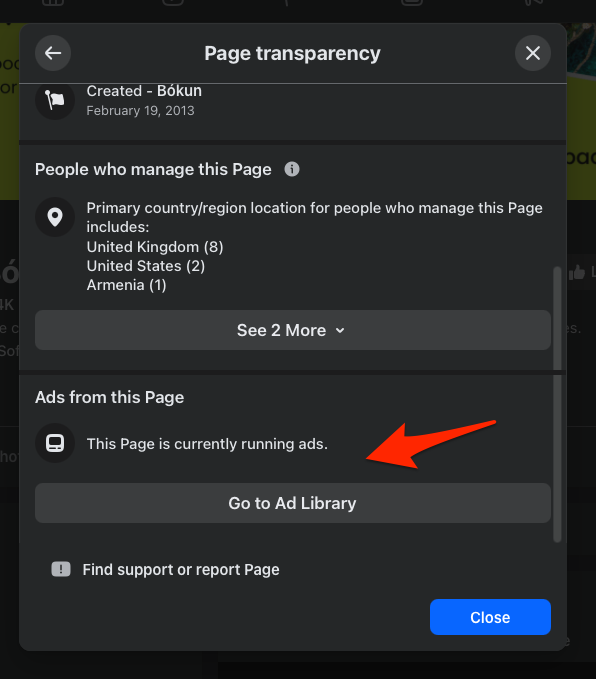
Goldmine! They are indeed running ads!!
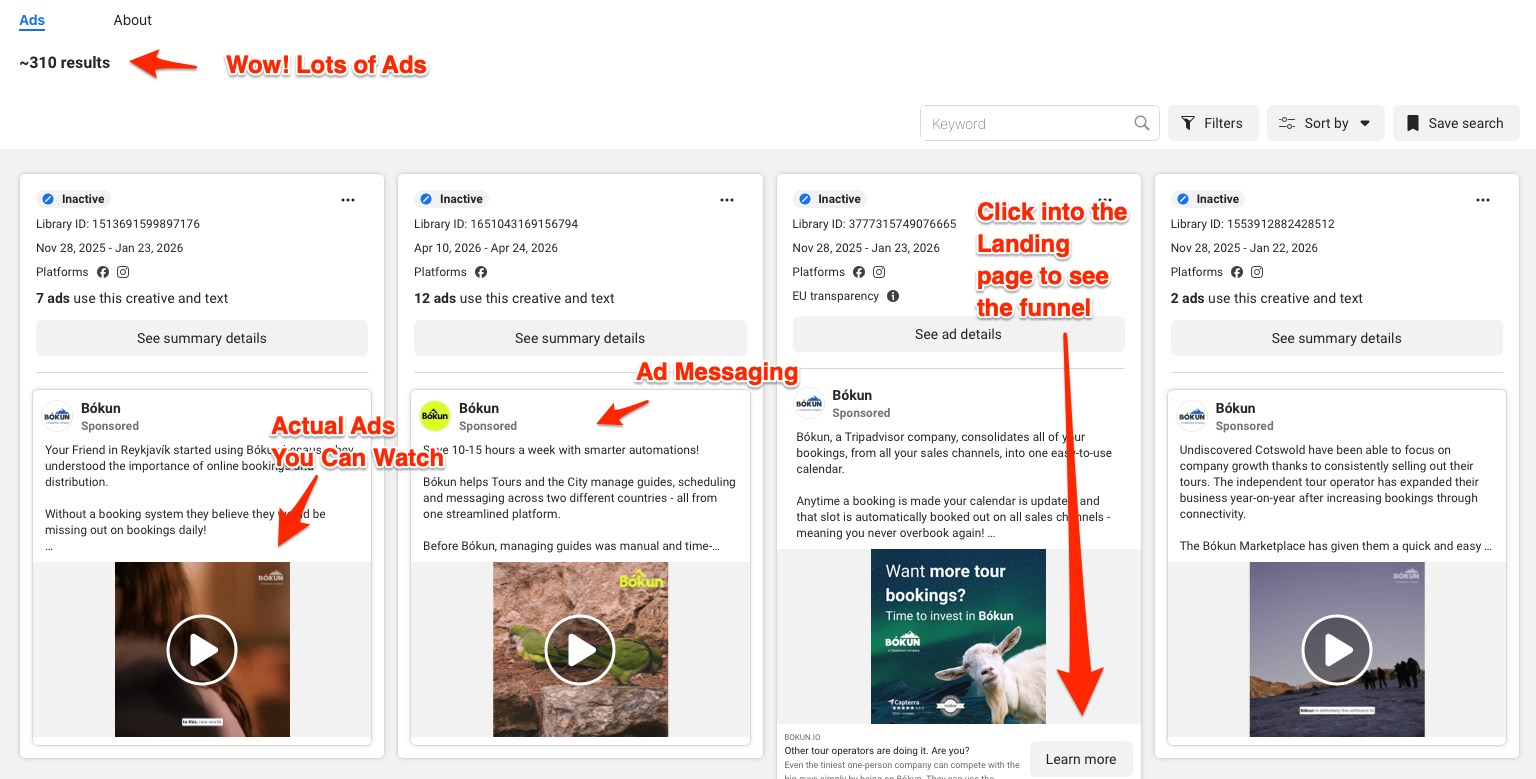
This is SUPER valuable stuff.
You’re seeing the actual messaging and funnels that are getting Bokun’s customers and when you think about it, it makes sense that they’d be running these on Facebook.
Tour companies are small businesses and these ads are directed at that kind of company.
When you see these ads, you’ll want to watch them to understand the messaging, and also click through.
You’ll be able to see the landing pages and messaging. These funnels (from ad, to landing page) are the machinery you can copy in your experiments to generate a customer for your business.
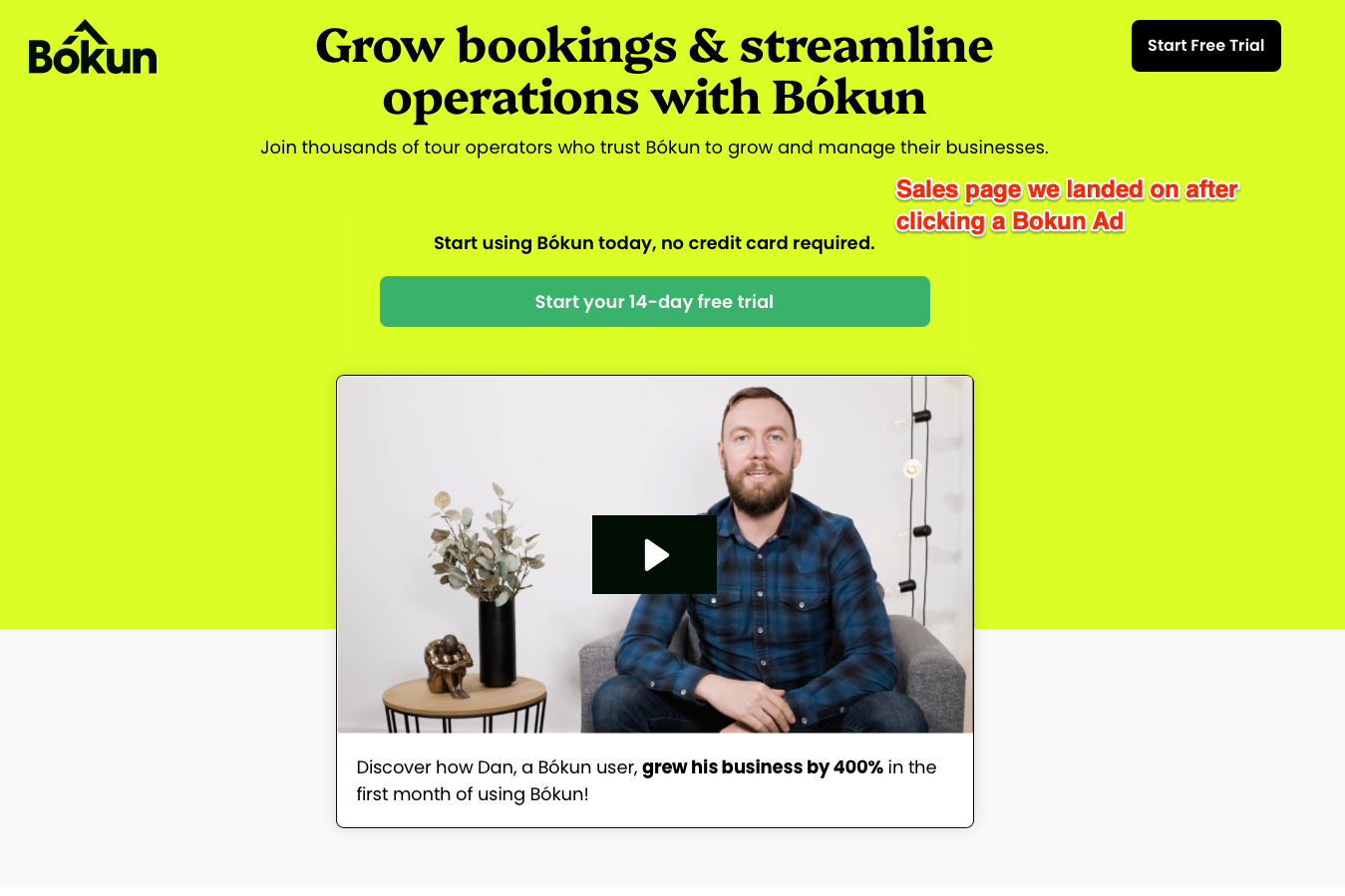
Here’s the sales page that the Facebook ad takes us to. You can scroll through the page, look at the messaging and understand exactly how Bokun is converting an ad lead into a customer.
Guess what? LinkedIn also has an ad library. You get to it by clicking this link on a company’s LinkedIn page.
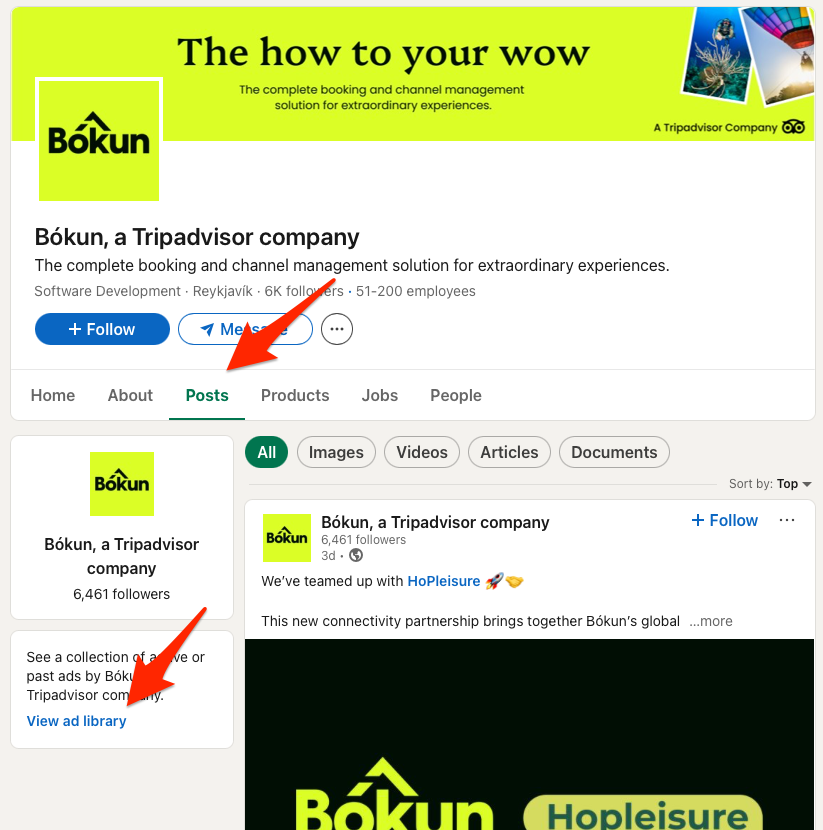
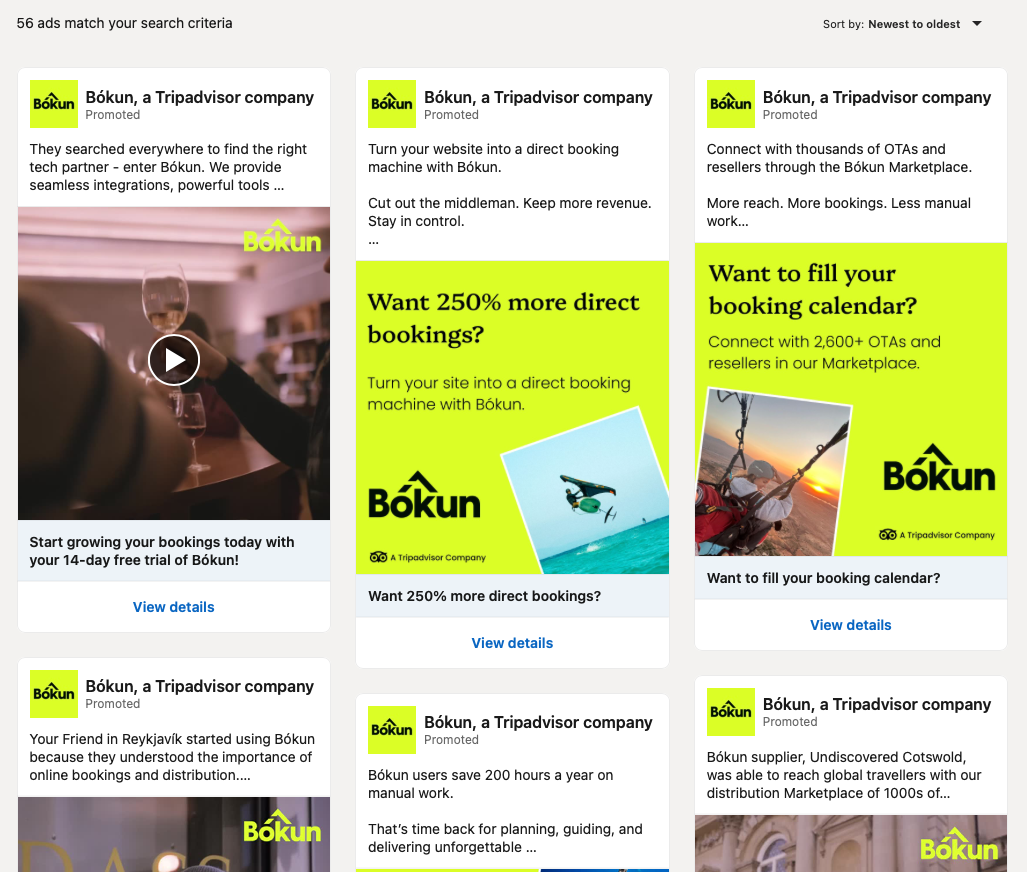
You might think that the ads and landing pages would be the same, but it’s often not the case. LinkedIn and Facebook have very different audiences. Often you’ll find that Facebook ads are directed at smaller businesses and LinkedIn ads are directed more torwards company executives.
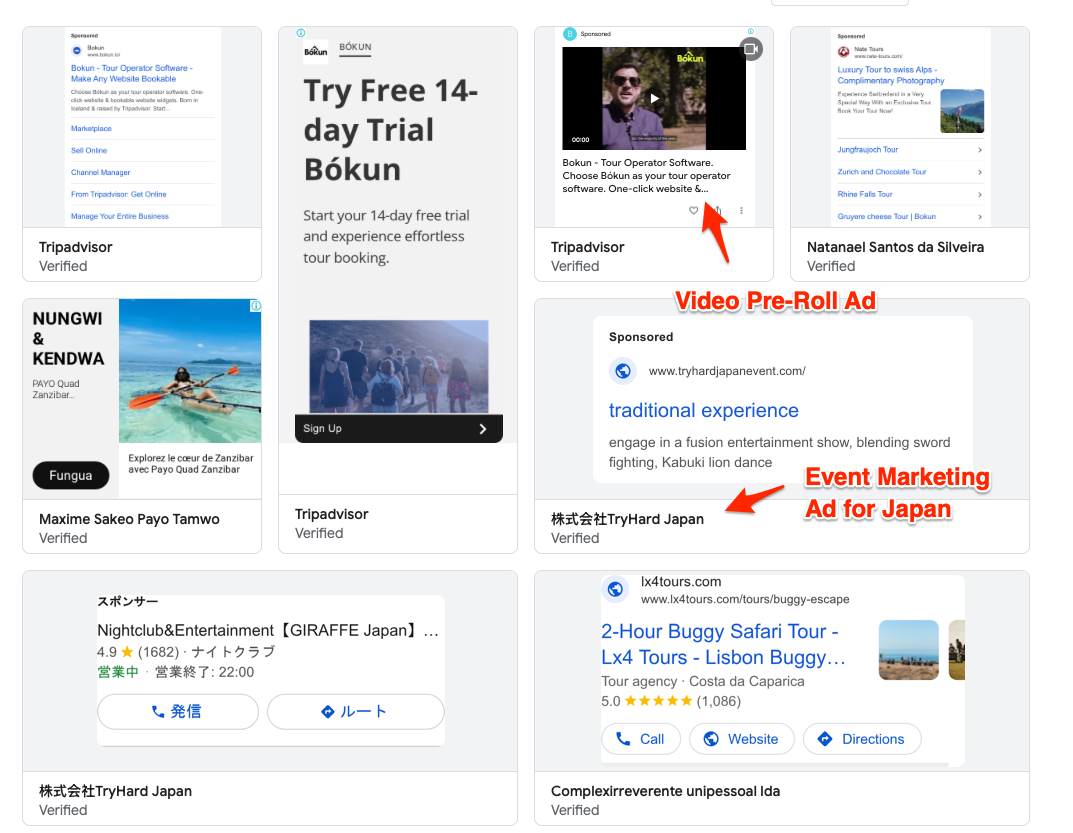
Finally there’s Google. Google also has an Ads Transparnecy Center. You can find it at: https://adstransparency.google.com
I searched Bokun.io and here are YouTube ads. Yep. They’re running those too.
Toward a go-to-market strategy
By the end of this research, we had a clear picture of how Bokun gets customers.
They run a full paid ad funnel across Facebook, LinkedIn, and YouTube, get traffic from search and organic leads from YouTube videos. We could see the messaging, the landing pages, and how they convert a cold lead into a paying customer.
It’s a detailed map we can use to build our own experiments.
The next steps would be to build a test funnel, buy some ads, and validate messaging, pricing, and niche targeting fast and cheap, with real data.
We can also dig into reviews, message boards, and conversations with current and former Bokun/FareHarbor customers to find gaps we could fill.
So there you have it. The market research process.
If you’d like some help, book a free market research session — we’ll go through this process together for your business. Or if you’re ready to go deeper, check out the 1:1 Strategy Session where we research your market, tune your messaging, and build a plan to get into market.
It’s always fun and enlightening. I’d love to see what we find.